




Power and Interconnect Co-Design for AI Data Centers: Balancing Energy Delivery and High-Speed Connectivity
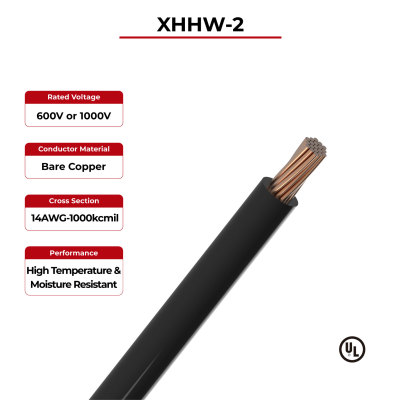
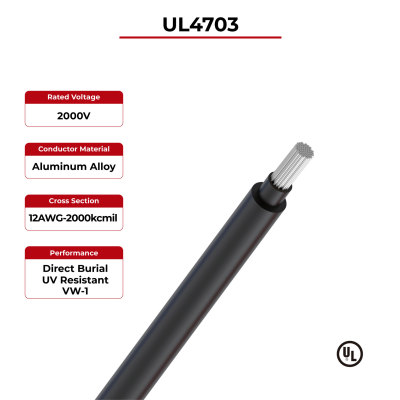
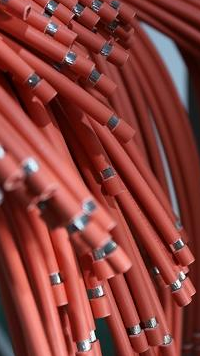
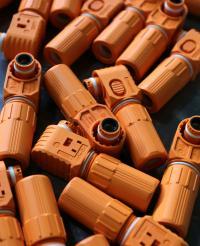
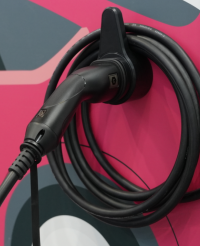
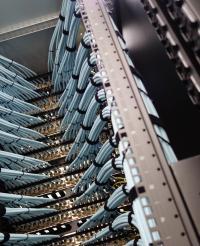
AI DATA CENTER POWER & HIGH-SPEED INTERCONNECT An AI data center is built on two inseparable pipelines: electricity and data. Every GPU that answers a query consumes power and pushes packets, and neither can be weak without limiting the other. Yet power delivery and high-speed interconnect are usually planned by different teams, specified in different documents, and upgraded on different schedules. This article explains why treating power and interconnect as a single co-designed system is essential for AI infrastructure, what changes when racks pull 100 kW or more, and the engineering decisions that keep both energy delivery and high-speed connectivity scaling together. Traditional cloud workloads scaled by adding modest racks of commodity servers. AI workloads scale differently: a single GPU cluster clusters hundreds of high-power accelerators that must exchange enormous data volumes continuously. The result is a facility where the power envelope and the interconnect fabric have both grown dramatically in a few short years. Two numbers capture the shift. Rack power density has climbed from a historic 5–10 kW to designs reaching 100 kW and beyond for GPU-dense racks. At the same time, east-west traffic inside the cluster now dwarfs north-south traffic to the outside world. In other words, the biggest network in an AI facility is the internal one—and it runs on the same physical infrastructure that also has to deliver reliable power to every rack. Plan the power path and the signal path together. A rack that cannot be cooled or powered cannot reach its rated performance, no matter how fast its interconnect is—and an interconnect that cannot carry the generated traffic becomes the bottleneck regardless of available power. Delivering power to a 100 kW rack is a multi-stage engineering challenge. The chain runs from the incoming utility feed, through transformers and switchgear, down to PDUs, and finally to each server's power supplies. Every stage must be sized for peak demand with margin, and every connection in the chain must remain stable under sustained high current and elevated temperature. High-density halls increasingly rely on overhead busbars and heavy-gauge feeders rather than traditional underfloor cables. Busbars carry large currents efficiently and allow reconfiguration as rack layouts change. Their terminations and joints must be engineered to handle continuous high current without developing hot spots, because a single resistive connection in a power-critical path can throttle an entire rack. Higher voltages reduce transmission losses but demand more careful insulation and connection engineering. AI facilities commonly adopt higher-voltage distribution where practical, using properly rated cables and connectors to move more power with less loss. The choice of voltage class, conductor material, and connection hardware is a decision that compounds over thousands of racks. On the data side, AI clusters need a low-latency, high-bandwidth fabric that connects accelerators within and across racks. This is where high-speed copper and optical interconnect come into play. Within a rack and across short distances, high-speed copper cabling offers cost and reliability advantages; across longer spans, optical links take over. For short, high-bandwidth links, direct attach copper (DAC) and active copper cables (ACC) remain efficient choices. They consume no conversion power, are durable, and cost less per link than optics. As speeds rise toward 224G per lane, copper's reach shortens, and the boundary between copper and optical shifts accordingly. As distances grow, optical interconnect becomes necessary. The trade-off is straightforward: optics convert electrical signals to light and back, adding small latency and power, but enabling the long reaches that a multi-hall campus demands. Modern AI fabrics blend copper for short hops and optics for longer ones, optimizing cost and latency together. The two paths converge in the rack and in the cable tray. Racks must carry both high-current power feeders and high-speed signal cabling in the same physical footprint, without interference or thermal conflict. This convergence drives several engineering considerations: Power cables generate heat and signal cables are heat-sensitive. Layout must keep high-current feeders from raising the ambient temperature around optical and copper interconnects. Both power and data compete for the same tray space. Co-design plans routing so future capacity is not walled off by one discipline's growth. Power connectors must hold torque under thermal cycling; data connectors must maintain signal integrity at high rates. Both need certified components and proper termination. AI facilities grow in phases. Power distribution and interconnect should both be sized with headroom so later phases do not require a full rewire. Looking ahead, the trends are clear. Rack densities will keep rising, per-lane interconnect rates will keep climbing, and the boundary between power and data engineering will keep blurring. Facilities that treat these as one integrated system will scale more gracefully than those that optimize each path in isolation. For project owners, the practical takeaway is to involve power and interconnect specialists in the same design reviews, to specify both paths with the same rigor, and to choose components—cables, connectors, harnesses—that are engineered to work together under the real thermal and electrical conditions of an AI hall. AI accelerators consume significantly more power than commodity servers. Clustering hundreds of these accelerators drives rack-level power from tens of kilowatts to 100 kW and beyond, requiring denser, more efficient power delivery to every rack. It depends on reach and cost. High-speed copper (DAC/ACC) is efficient and economical for short links within and between nearby racks, while optical interconnect is required for longer distances across halls and buildings. Most AI fabrics blend both. A rack that cannot be adequately powered or cooled cannot reach its rated compute, so high-speed links would be underutilized. Co-designing power and interconnect ensures the signal path is never limited by an under-specified power path. AI data centers are defined by the synergy between energy delivery and high-speed interconnect. Power and data are no longer separate engineering silos but two halves of a single system that must scale together. By planning the power path and the signal path as one co-designed architecture—with reliable connectors, adequate thermal separation, and staged headroom—operators can build AI infrastructure that delivers its full performance today and extends gracefully into the next generation.Why AI Changed the Rules of Data Center Design
The Co-Design Principle
The Power Path: From Grid to GPU
Busbar and Feeder Design
Voltage and Distribution Strategy
The Interconnect Path: Scale-Out Fabric
Copper Within the Rack
Optics Between and Across Buildings
Where Power and Interconnect Meet
Thermal Separation
Cable Tray Capacity
Connector Reliability
Staged Expansion
Designing for the Next Generation of AI
Frequently Asked Questions
Why are AI data centers shifting to higher rack power densities?
Should AI clusters use copper or optical interconnect?
How does power delivery affect interconnect performance?
Conclusion