




What Is a Direct Attach Copper (DAC) Cable? Applications in AI Servers and Data Centers Explained
The rapid growth of artificial intelligence, cloud computing, and high-performance computing (HPC) is driving unprecedented demand for faster data transmission inside servers and data centers. As GPUs become more powerful and AI clusters continue to expand, efficient connectivity between servers, switches, storage systems, and networking equipment has become a critical factor in overall system performance.
Among the various high-speed interconnect solutions available today, Direct Attach Copper (DAC) cables remain one of the most widely used options for short-distance, high-bandwidth communication. But what exactly is a DAC cable, and why is it still playing an important role in modern AI infrastructure despite the rise of optical interconnects?
This guide explains the fundamentals of DAC technology, its advantages and limitations, and its key applications in AI servers and data centers.
What Is a DAC Cable?
A Direct Attach Copper (DAC) cable is a factory-terminated high-speed copper cable assembly used to connect networking devices directly without requiring separate transceivers.
Unlike traditional fiber optic solutions, DAC cables integrate connectors and copper conductors into a single assembly, allowing devices to communicate over short distances with low latency and low power consumption.
Typical DAC cables are used to connect:
· Servers to switches
· Switches to switches
· Storage systems

· GPU servers
· High-performance computing clusters
· AI training infrastructure
In most cases, DAC cables are equipped with high-speed interfaces such as:
· SFP+
· SFP28
· QSFP+
· QSFP28
· QSFP56
· QSFP-DD
· OSFP
As network speeds continue to increase, DAC technology has evolved to support transmission rates from 10G and 25G all the way to 400G, 800G, and emerging 1.6T applications.
Why DAC Cables Are Important in AI Infrastructure
Artificial intelligence workloads generate enormous amounts of data. When training large language models or processing massive datasets, GPUs must continuously exchange information with:
· Other GPUs
· CPUs
· Storage systems
· Network switches
In many AI clusters, data movement becomes just as important as computing power. Even the fastest GPU can become underutilized if communication between devices is slow. This is where DAC cables play a critical role.
They provide:
· High-speed connectivity
· Low latency communication
· Reduced power consumption
· Cost-effective deployment
For short-reach connections inside racks and between adjacent racks, DAC cables often deliver the most practical solution.
How Does a DAC Cable Work?

At its core, a DAC cable is a carefully engineered high-speed transmission channel. A typical high-speed DAC cable consists of:
Conductors
The conductors serve as the signal transmission path. Common conductor options include:
· Bare copper
· Tin-plated copper
· Silver-plated copper
High-frequency performance and attenuation characteristics are heavily influenced by conductor material and construction.
Insulation Layer
The insulation material directly impacts signal integrity. Common materials include:
· FEP
· Foam FEP
· PE
· PP
Low dielectric constant materials help reduce signal loss and support higher transmission speeds.
Shielding Layer
Shielding protects high-speed signals from electromagnetic interference (EMI). Common shielding structures include:
· Aluminum foil
· Copper foil
· Braided shielding
Proper shielding minimizes:
· Signal leakage
· External interference
· Crosstalk
Mylar and Structural Layers
Mylar and polyester tapes help maintain cable geometry and impedance stability. These layers:
· Preserve pair positioning
· Improve electrical consistency
· Protect shielding structures
· Enhance mechanical reliability
For high-speed communication, maintaining a consistent cable structure is essential.
Passive DAC vs Active DAC
DAC cables are generally divided into two categories.
Passive DAC
Passive DAC cables contain no signal amplification circuitry. Characteristics include:
· Lower cost
· Lower power consumption
· Simpler architecture
· Excellent reliability

Typical reach:
· Up to 3–5 meters
Applications:
· Server-to-switch connections
· In-rack networking
Active DAC
Active DAC cables incorporate signal conditioning electronics inside the connectors. Advantages include:
· Longer transmission distance
· Improved signal quality
· Better performance at higher data rates
Typical reach:
· Up to 7–15 meters depending on design
Applications:
· Larger rack configurations
· High-density networking environments
Why AI Data Centers Still Use Copper
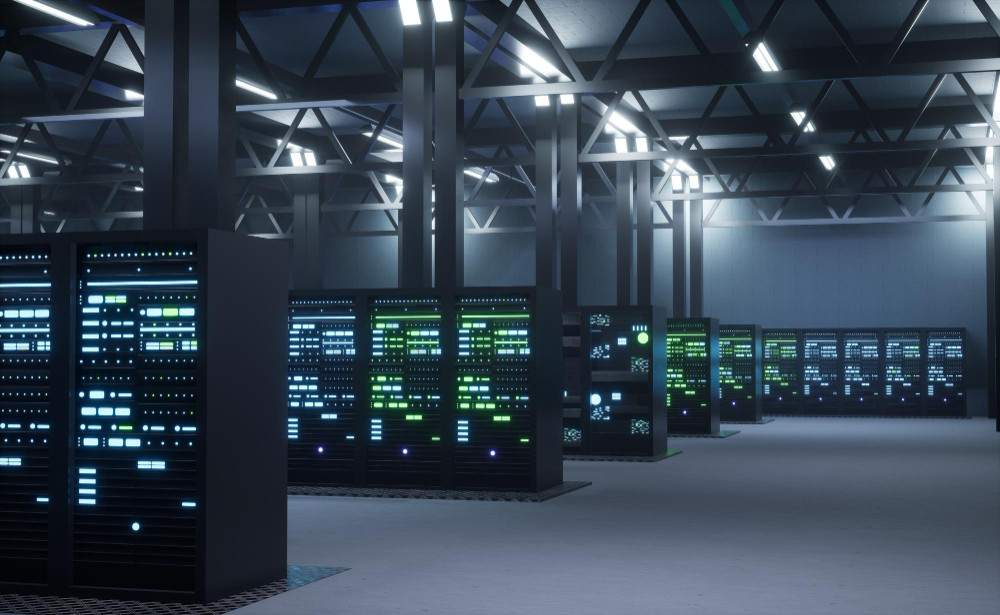
Many people assume that fiber optics have completely replaced copper. In reality, both technologies coexist. For short-distance interconnects, DAC cables often offer significant advantages.
Lower Cost
DAC assemblies typically cost less than equivalent optical solutions. This becomes especially important when deploying thousands of connections in large AI clusters.
Lower Power Consumption
Fiber optic links require optical transceivers at both ends. DAC cables eliminate this requirement, reducing overall power usage.
In hyperscale data centers, even small power savings can result in substantial operational cost reductions.
Lower Latency
Because signals travel directly through copper conductors without optical conversion, DAC solutions can provide extremely low latency. This is particularly beneficial for AI training environments where rapid data exchange is essential.
Simpler Deployment
DAC cables are plug-and-play solutions. No separate optics are required, simplifying installation and inventory management.
Common DAC Applications in Data Centers
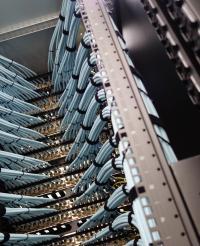
Server-to-Switch Connections
This is the most common DAC application. Servers connect directly to top-of-rack (ToR) switches using short DAC assemblies. Benefits include:
· Reduced cabling complexity
· Lower deployment cost
· Reliable high-speed communication
GPU Cluster Networking
AI training clusters often require large numbers of GPU servers connected through high-bandwidth switching fabrics. DAC cables help support:
· GPU-to-switch links
· High-density rack designs
· Cost-efficient scaling
Storage Networks
High-speed storage systems depend on low-latency communication. DAC cables provide reliable connectivity between:
· Storage arrays
· Compute nodes
· Network switches
High-Performance Computing (HPC)
Supercomputers and HPC environments demand extremely fast data exchange. DAC cables are widely used for short-reach interconnects where signal integrity and latency are critical.
SUNKEAN's High-Speed DAC Cable Capabilities
As AI computing and data center networking continue to evolve, SUNKEAN provides high-speed copper cable solutions designed for demanding communication environments. Our manufacturing capabilities include:
· High-performance conductor options including silver-plated copper
· Foam FEP insulation technology for lower signal loss
· Precision shielding structures for EMI protection
· Advanced extrusion and wrapping processes
· Real-time SIKORA online monitoring systems
· Rosendahl foaming equipment
· 67GHz network analyzer verification
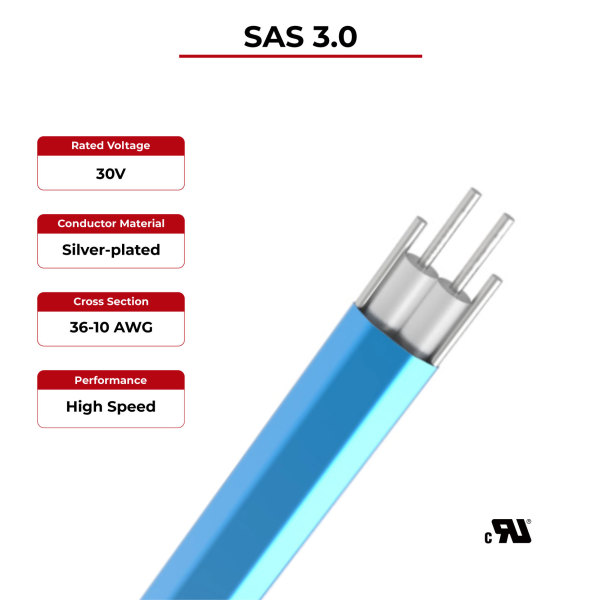
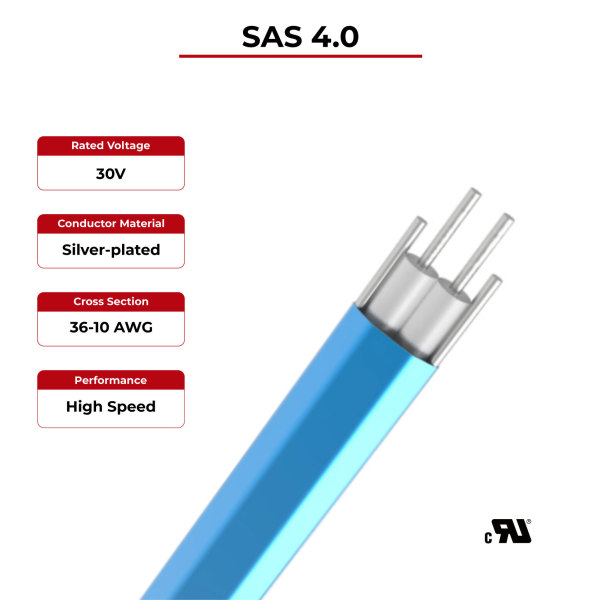
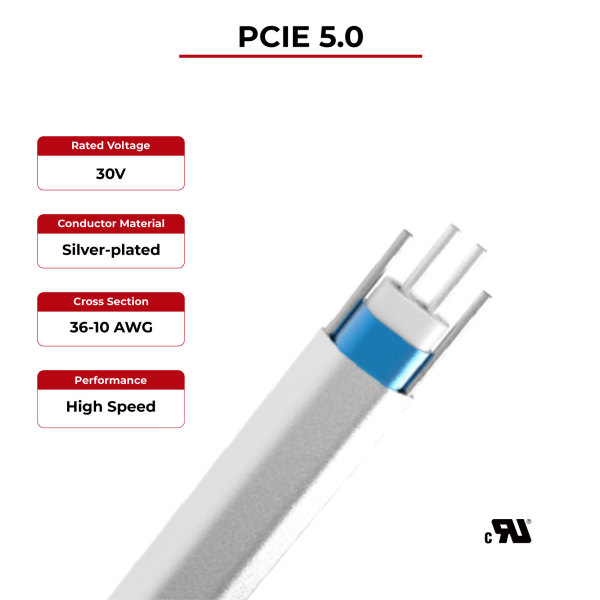
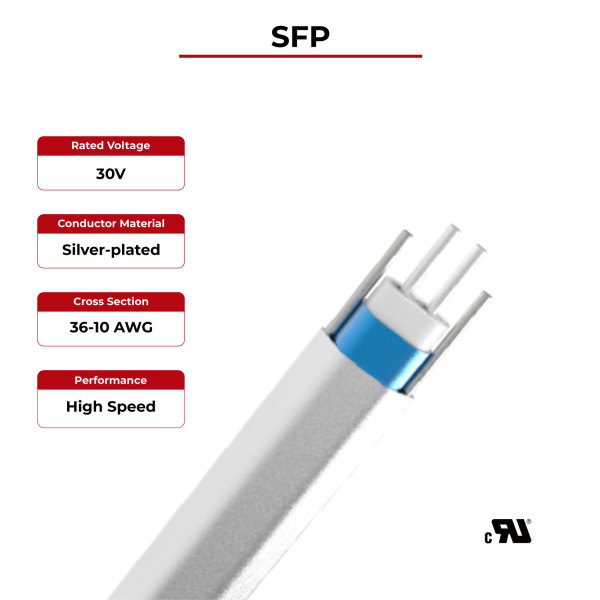
Conductor: 30AWG, 28AWG, 26AWG
Insulation: FEP+FEP/PE/FEP+PTFE
Direct Attach Copper (DAC) cables remain one of the most important connectivity solutions in modern AI servers and data centers. Their combination of low latency, low power consumption, cost efficiency, and deployment simplicity makes them particularly attractive for short-distance high-speed interconnects.
As the industry transitions from 112G to 224G signaling and beyond, DAC cable design and manufacturing precision will become increasingly critical. For data center operators, AI infrastructure builders, and equipment manufacturers, selecting high-quality DAC cable solutions is essential for ensuring reliable, scalable, and future-ready network performance.
Looking for reliable ev charging cable solutions for your project?
SUNKEAN provides high-performance cables designed for solar, industrial, and infrastructure applications — with proven durability, customized solutions, and global project experience.
👉 Contact our team for technical consultation or product recommendations,
or simply send us your project requirements:
Email: sales@sunkean.com
Tel: +86 0510-81083036
WhatsApp: 17252867971